



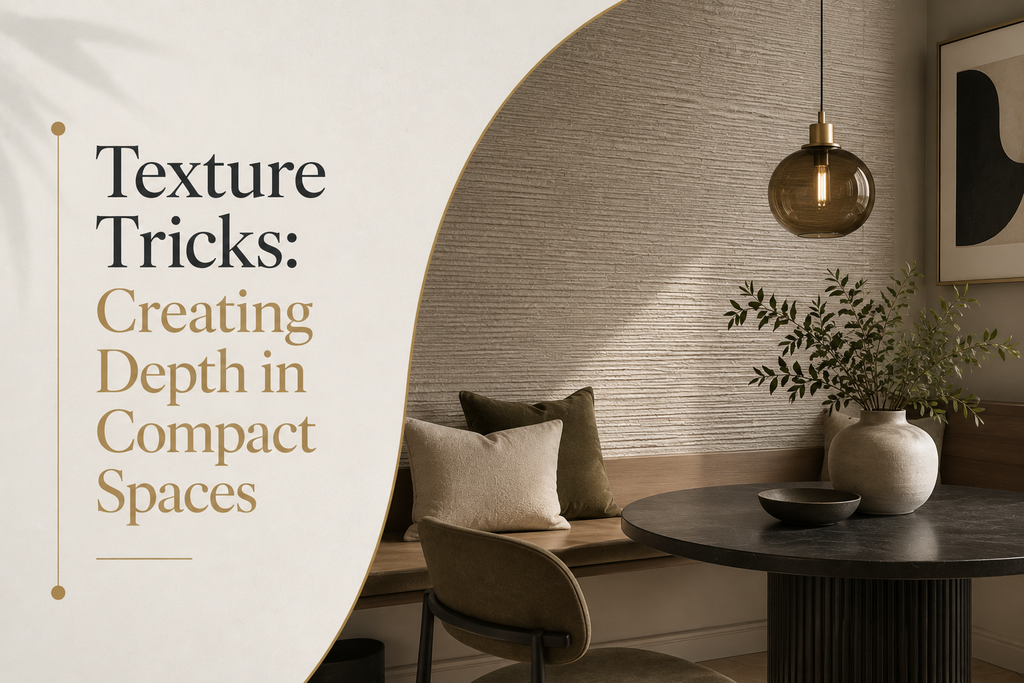
Texture Tricks: Creating Depth in Compact Spaces
Small rooms don't have to feel visually limited.
In fact, some of the most memorable interiors are compact spaces where every surface has been carefully considered. The challenge is not necessarily making a small room look bigger. It's creating enough visual depth that the room feels layered, intentional, and comfortable rather than flat or crowded.
Texture can be one of the most effective tools for doing exactly that.
A textured wall can introduce dimension without taking up physical space. Subtle relief can interact with natural light. Tonal patterns can create movement without overwhelming the room. And the right wallpaper can give a compact interior a sense of character that furniture alone can't achieve.
At Walloro, we see wallpaper as more than a decorative layer. In smaller spaces, it can become a design tool for shaping perception.
Why Small Rooms Often Feel Flat
Compact rooms naturally have fewer surfaces to work with.
There may be limited floor space, fewer furniture pieces, and less room for decorative objects. As a result, homeowners sometimes choose completely plain walls in an effort to keep the room visually simple.
But simplicity and flatness aren't the same thing.
When everything has the same smooth surface, the room can lack visual variation.
Texture solves part of that problem.
Instead of adding another object, you add depth directly to the wall.
That distinction is important in small spaces because the best design solutions often don't require additional physical space.
Texture Adds Depth Without Taking Up Room
A piece of furniture occupies floor space.
A decorative object occupies shelf or surface space.
Wallpaper doesn't require either.
A textured wallcovering can introduce another visual layer while keeping the physical footprint of the room exactly the same.
This makes texture particularly useful for:
- Small bedrooms
- Compact living rooms
- Narrow hallways
- Entryways
- Powder rooms
- Home offices
- Apartments
- Reading corners
The wall becomes part of the room's visual architecture without making the room physically smaller.
Think Beyond Color
When trying to make a compact room feel more interesting, color is usually the first thing homeowners consider.
But texture can sometimes have a more sophisticated effect.
Imagine two walls in the same warm ivory color.
One is completely flat.
The other has a subtle linen-inspired texture.
The color hasn't changed dramatically, but the second surface has more visual information.
Light catches different areas.
Shadows create variation.
The wall feels more dimensional.
This is one of the reasons textured wallpaper works so well in neutral interiors.
Tonal Texture Is a Small-Space Secret
You don't always need a dramatic pattern to create depth.
Tonal wallpaper uses variations within a similar color family to create visual movement without strong contrast.
For example:
- Warm ivory with subtle cream texture
- Soft taupe with slightly darker relief
- Pale gray with dimensional patterning
- Sand with woven-inspired detail
Because the contrast remains controlled, the wall can feel interesting without becoming visually dominant.
This is particularly useful when you want a small room to feel sophisticated rather than busy.
Why Embossed Wallpaper Works So Well
Embossed wallpaper introduces physical relief to the wall.
Instead of relying entirely on printed imagery, the surface itself creates dimension.
This can be especially effective in compact spaces because the texture changes depending on the direction and intensity of light.
During the day, natural light can highlight raised details.
In the evening, lamps and wall lighting can create softer shadows.
The result is a wall that feels different throughout the day without changing the furniture or accessories.
Use Light to Your Advantage
Texture and lighting work together.
A textured wall facing a window may receive strong natural light for part of the day.
Another wall may remain relatively shaded.
The same wallpaper can therefore look different depending on where it is installed.
Before choosing a design, consider:
- Which direction the windows face
- Where direct sunlight falls
- Whether the room receives limited daylight
- Where artificial lighting is positioned
- Whether the wall will be illuminated at night
A subtle texture may become beautifully dimensional under directional light.
A highly detailed pattern may become too visually active in a brightly lit compact room.
Choose the Right Scale
Pattern scale matters enormously in small rooms.
A common assumption is that small spaces always require tiny patterns.
That's not necessarily true.
An oversized pattern can sometimes create a sophisticated, immersive effect.
The key is how the pattern interacts with the rest of the room.
Smaller-scale patterns
These can create gentle visual movement and are often easier to combine with other elements.
Medium-scale patterns
These can provide personality without dominating the room.
Large-scale designs
These can create a dramatic, enveloping effect when used thoughtfully.
Instead of automatically choosing the smallest pattern, consider the overall composition.
Vertical Texture Can Emphasize Height
If a compact room has a low ceiling, vertical direction can help draw the eye upward.
This doesn't mean you need an obvious striped wallpaper.
Subtle vertical texture, elongated motifs, or vertically oriented patterns can create a similar visual movement.
The eye follows the direction of the design, making the ceiling feel visually connected to the rest of the room.
This technique can work particularly well in:
- Small bedrooms
- Narrow entryways
- Compact bathrooms
- Older apartments with low ceilings
Horizontal Movement Can Make Narrow Spaces Feel Wider
The opposite principle can also be useful.
Horizontal lines, elongated patterns, or textures that visually move across the wall can emphasize width.
This can work well in narrow rooms or corridors.
The goal isn't to create an optical illusion that completely changes the dimensions.
It's to influence how your eye travels through the space.
That subtle shift can make a compact room feel more balanced.
Don't Texture Every Surface
One of the easiest ways to lose the benefits of texture is to use too much of it.
If every wall contains a strong pattern, every piece of furniture has a tactile finish, and every accessory adds another visual layer, the room can quickly feel crowded.
Instead, create hierarchy.
You might use:
One textured feature wall + quieter surrounding surfaces
or:
Subtle wallpaper throughout + stronger furniture or artwork
The goal is contrast without chaos.
Texture Can Replace Decoration
This is particularly useful for compact spaces.
When floor and surface area are limited, you may not have room for lots of decorative accessories.
Wallpaper can provide visual interest without adding another physical object.
A textured wall can become the backdrop for a simple console.
An embossed surface can make a small bedroom feel finished without requiring multiple pieces of artwork.
A sophisticated pattern can give a narrow hallway personality without taking up an inch of floor space.
This is one of wallpaper's greatest advantages in compact interiors.
Keep Furniture Visually Light
If the walls already provide texture, consider balancing them with furniture that doesn't feel excessively heavy.
Leggy furniture can create more visible floor area.
Glass or reflective surfaces can reduce visual weight.
Simple silhouettes can allow the wallpaper to remain part of the composition.
This doesn't mean every small room needs minimalist furniture.
It simply means the wall and furniture should work together rather than compete.
Use Mirrors Strategically
Texture creates visual depth.
Mirrors create reflection.
Together, they can produce an especially effective combination.
A mirror placed against or near a textured wall can reflect both the surface and the available light.
This can make the room feel more layered.
The important thing is to use reflection intentionally.
A mirror doesn't automatically make every small room feel larger. Its placement, size, and relationship to windows matter.
Warm Neutrals Can Create Sophisticated Depth
Compact rooms often benefit from colors that don't create excessive visual contrast.
Warm neutrals are particularly versatile.
Think:
- Ivory
- Cream
- Sand
- Beige
- Taupe
- Greige
- Soft brown
When combined with texture, these colors can create a layered interior without making the walls feel visually heavy.
Add natural wood, linen, soft upholstery, or stone-inspired materials, and the room can develop considerable depth while remaining restrained.
Dark Texture Can Work in Small Rooms Too
There is no rule saying small rooms must have pale walls.
A darker textured wallpaper can create an enveloping, intimate atmosphere.
This can be particularly effective in:
- Powder rooms
- Studies
- Dining areas
- Bedrooms
- Reading spaces
Instead of trying to make the room appear larger, you're embracing its compact scale.
The result can feel dramatic and intentional.
Sometimes the most successful small room isn't the one that tries to disappear.
It's the one that fully commits to its identity.
Create Depth Through Material Contrast
Wallpaper becomes even more effective when it interacts with other materials.
Try combining textured walls with:
Wood
The natural grain introduces warmth.
Metal
Brass, bronze, or matte metal can create subtle contrast.
Glass
Reflective surfaces add another layer of light.
Stone
Stone and textured wallpaper create a tactile relationship.
Fabric
Linen, boucle, wool, and other textiles can reinforce the room's softness.
The objective isn't to use every material.
Choose a few that complement the wallpaper.
Small Rooms Don't Need Small Personalities
One of the biggest mistakes homeowners make is assuming that compact spaces need to be visually quiet.
They don't.
A small room can have:
- Strong architectural character
- Dramatic wallpaper
- Rich texture
- Expressive artwork
- Dark colors
- Interesting furniture
What matters is how these elements are organized.
Good design isn't about removing personality because the room is small.
It's about controlling visual hierarchy.
Where Texture Works Best in a Compact Home
Entryways
A textured wallcovering can make a small entrance feel immediately intentional.
Powder Rooms
Because they are compact, powder rooms can handle bolder wallpaper choices than many larger spaces.
Bedrooms
A textured wall behind the bed can create a sophisticated focal point without requiring additional decoration.
Home Offices
Texture can make a small workspace feel more polished and less sterile.
Hallways
A narrow hallway can become a design feature rather than simply a passage between rooms.
Common Texture Mistakes
Choosing Texture Without Considering Light
A texture that looks subtle online may appear much stronger under direct lighting.
Using Too Many Competing Textures
Texture should create depth, not visual confusion.
Ignoring Pattern Scale
The size of the pattern should work with the proportions of the room.
Treating Every Wall Equally
Sometimes one carefully selected wall creates more impact than covering everything.
Adding Too Much Decoration
If the wallpaper already provides visual interest, let it breathe.
Why Walloro Wallpaper Works in Compact Interiors
At Walloro, we believe small spaces deserve the same level of design consideration as large ones.
Premium wallpaper can give compact rooms something that furniture alone often cannot: visual depth without physical bulk.
Textured surfaces, sophisticated patterns, embossed details, and carefully developed color palettes allow homeowners to create interiors that feel layered without becoming crowded.
Whether you're working with a compact apartment bedroom, a narrow hallway, a small living room, or a cozy home office, the wall can become one of your most valuable design tools.
You don't necessarily need more space.
You may simply need to use the space you already have more thoughtfully.
Frequently Asked Questions
Does textured wallpaper make a small room look smaller?
Not necessarily. Subtle textures and well-scaled patterns can add depth without visually overwhelming the room. The effect depends on color, pattern scale, lighting, and how the wallpaper interacts with the rest of the interior.
Is wallpaper a good idea for a small room?
Yes. Wallpaper can introduce color, texture, and personality without taking up physical space, making it particularly useful in compact interiors.
Should small rooms use light wallpaper?
Light colors can help maintain an airy feeling, but darker wallpaper can also work beautifully when the goal is to create a cozy or dramatic atmosphere.
Is embossed wallpaper suitable for compact spaces?
Yes. Subtle embossed wallpaper can introduce dimensionality and changing light effects without requiring additional decorative objects.
Should every wall have the same texture?
No. Using one feature wall or combining a textured wall with quieter surfaces can create stronger visual hierarchy and prevent the room from feeling overwhelmed.
Final Thoughts
Creating depth in a compact space isn't necessarily about making the room appear bigger.
It's about making it feel richer.
Texture gives the eye somewhere to explore.
Light reveals dimension.
Pattern creates movement.
Color establishes atmosphere.
And wallpaper brings these elements together without taking up additional physical space.
That's what makes texture such a valuable design tool for smaller interiors.
At Walloro, we believe every wall has the potential to contribute something meaningful to a room.
Sometimes, the smartest way to create more depth isn't to add more objects.
It's to give the walls more to say.