


Mix Multiple Wallpapers in One Room Successfully
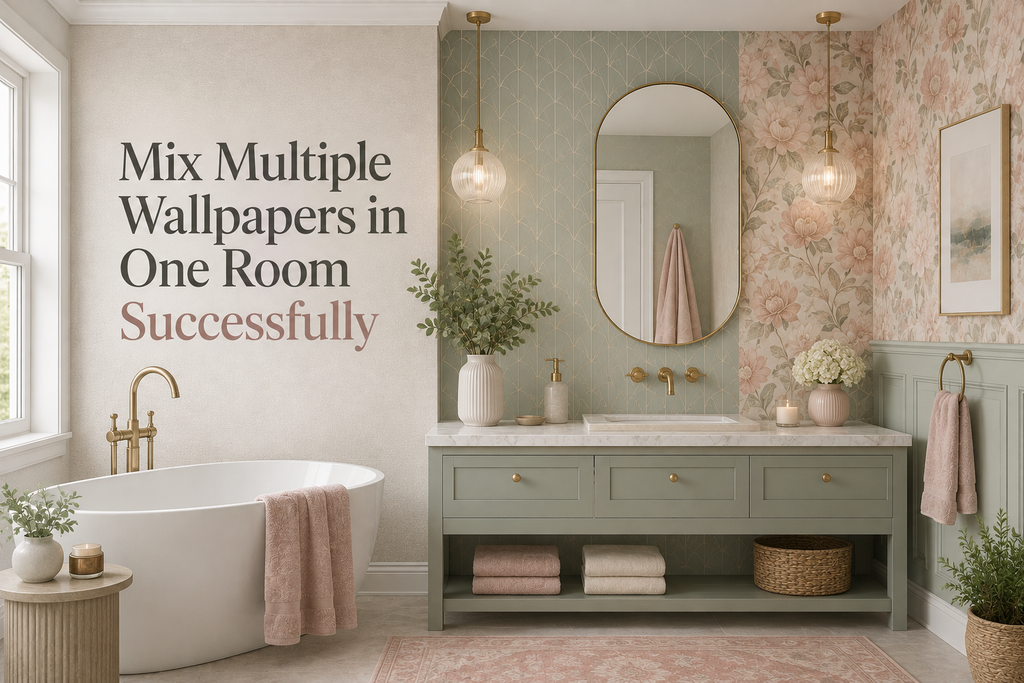
Using multiple wallpapers in one room can create a layered, sophisticated interior—but only when each design has a clear purpose. Combining different patterns isn't simply about choosing several wallpapers you love. It's about understanding how color, scale, texture, and placement interact.
A room can successfully combine floral and geometric wallpaper, bold and subtle patterns, or printed and textured wallcoverings. The result can feel architectural, expressive, and highly intentional rather than busy.
The secret is simple: don't make every wallpaper compete for attention.
Why Use Multiple Wallpapers in One Room?
Traditionally, wallpaper is often treated as a single-room decision. One pattern covers the walls, while furniture and accessories provide the contrast.
But using multiple wallcoverings can create opportunities that a single design cannot.
Multiple wallpapers can:
-
Define different zones
-
Highlight architectural features
-
Create a focal point
-
Add visual depth
-
Balance strong patterns
-
Introduce contrast
-
Make large rooms feel more structured
-
Give smaller spaces more personality
In an open-plan living and dining area, for example, two wallpapers can visually separate the spaces without adding a physical wall.
In a bedroom, one wallpaper can establish a dramatic backdrop behind the bed while a quieter design creates balance on surrounding walls.
The objective is not simply to add more pattern. It's to create relationships between surfaces.
Start With One Main Wallpaper
Before choosing a second or third wallpaper, identify the design that will lead the room.
This is your hero wallpaper.
It might be the design with:
-
The largest pattern
-
The strongest contrast
-
The richest color
-
The most distinctive texture
-
The greatest visual impact
Once you have selected the hero, choose additional wallpapers that support it.
For example:
Hero: Large-scale botanical pattern
Supporting: Small geometric design
Bridge: Subtle textured wallcovering
This creates a clear visual hierarchy.
Without hierarchy, multiple wallpapers can make a room feel visually fragmented.
Choose a Common Color
Different wallpaper patterns become much easier to combine when they share a color connection.
The wallpapers don't have to use identical palettes.
Instead, look for one recurring shade.
Imagine a room featuring a botanical wallpaper with:
-
Sage green
-
Cream
-
Warm beige
-
Charcoal
A geometric wallpaper containing cream and sage can work beautifully alongside it.
The patterns remain different, but the repeated color creates continuity.
Don't Forget Undertones
Color matching isn't only about the obvious colors.
Warm beige and cool beige can look completely different together. The same is true of:
-
Whites
-
Grays
-
Greens
-
Blues
-
Browns
Always examine wallpaper samples under the actual lighting conditions of your room.
Vary the Pattern Scale
Pattern scale is one of the most effective tools for successful wallpaper mixing.
If every wallpaper has a large, dramatic motif, the room can become overwhelming.
Instead, create a hierarchy through size.
For example:
Large floral → medium geometric → small texture
or:
Large geometric → delicate botanical → subtle textured surface
The largest pattern attracts attention, while smaller patterns support it.
This creates visual rhythm and prevents the walls from competing equally.
Mix Pattern Types
Multiple wallpapers become more interesting when the designs have different visual qualities.
Consider combinations such as:
-
Floral + geometric
-
Botanical + stripe
-
Abstract + linear
-
Geometric + texture
-
Damask + contemporary pattern
-
Organic motif + architectural design
The contrast between pattern types can create depth.
A flowing botanical design introduces softness, while a geometric pattern provides structure.
The important thing is to connect them through at least one element—usually color, scale, or overall design character.
Pattern + Texture Is a Powerful Combination
You don't need every wallpaper to be heavily patterned.
One of the easiest ways to create a sophisticated multi-wallpaper room is to combine a statement pattern with a textured wallcovering.
For example:
Bold botanical wallpaper + linen-inspired texture
or:
Geometric wallpaper + subtle embossed wallcovering
The patterned wallpaper creates the focal point, while the texture adds dimension without demanding equal attention.
This approach works particularly well in bedrooms, living rooms, and sophisticated home offices.
Use Multiple Wallpapers to Define Zones
One of the strongest reasons to use multiple wallpapers is to give different areas of a room their own identity.
This is especially useful in open-plan interiors.
Imagine a large room containing:
-
A seating area
-
Dining area
-
Reading corner
Instead of separating these spaces with furniture alone, wallpaper can help establish visual boundaries.
For example:
Living area: soft textured wallpaper
Dining area: expressive geometric wallpaper
Reading corner: subtle botanical wallpaper
The room remains visually connected while each zone feels intentional.
Accent Walls Are Only the Beginning
Using one wallpaper on an accent wall and another on the remaining walls is the most familiar approach.
But there are other possibilities.
You can use wallpaper inside:
-
Wall panels
-
Alcoves
-
Built-in shelving
-
Niches
-
Fireplace surrounds
-
Arched recesses
A statement wallpaper inside a panel can create a more refined focal point than covering an entire wall.
This is especially effective in interiors with architectural molding or custom millwork.
Consider the Architecture
Wallpaper should respond to the architecture of the room.
A tall room may benefit from a pattern that emphasizes vertical movement.
A wide room can use broader patterns to reinforce its horizontal proportions.
Rooms with strong architectural details may benefit from a quieter wallpaper on the main walls and a more expressive design inside specific features.
Instead of fighting the architecture, use wallpaper to make it more noticeable.
Think About Sightlines
A wallpaper combination needs to work from different viewpoints.
This is particularly important when:
-
Two walls are visible at once
-
The room connects to another space
-
The home has an open floor plan
-
Large doorways connect rooms
-
The room has multiple seating areas
Stand at the entrance and look across the room.
Then move to the opposite side.
Ask:
Which wallpaper do I notice first?
If the answer changes naturally and the patterns still feel connected, your hierarchy is probably working.
Don't Make Every Wall a Statement
More wallpaper doesn't necessarily mean more impact.
In many cases, the most sophisticated room contains one strong pattern and several quieter surfaces.
Think of the walls as a composition.
One area can be expressive.
Another can be understated.
Another can provide texture.
This creates visual breathing room.
A room where every wall demands attention can quickly become tiring.
Balance Wallpaper With Furniture
Furniture should be considered part of the pattern equation.
If your sofa has a bold print, your wallpaper may need to be quieter.
If your furniture is primarily solid-colored, you have more freedom to introduce a statement wallcovering.
Also consider the shapes of the furniture.
Curved Furniture
Rounded furniture can work beautifully with geometric wallpaper because the pattern introduces structure.
Angular Furniture
Straight-lined furniture can benefit from organic patterns that soften the overall composition.
Minimal Furniture
Simple furniture allows wallpaper to take a stronger role in the room.
The best combinations are usually those where the wallpaper and furniture complement rather than compete with one another.
Use the 60–30–10 Principle
The 60–30–10 approach can provide a useful starting point when several wallpapers are involved.
Think of the room as:
60% — Foundation
Neutral surfaces, flooring, major furniture, or a subtle wallcovering.
30% — Supporting layer
Secondary wallpaper, textiles, furniture, or accent color.
10% — Statement
The boldest wallpaper or strongest visual feature.
This isn't a rigid decorating formula. It's simply a way to establish visual hierarchy.
If two wallpapers are equally dominant, consider reducing the intensity of one.
Create a Color Story
A cohesive room usually has a color story rather than a collection of unrelated colors.
Choose a foundation palette before selecting multiple wallpapers.
For example:
Warm neutral + olive + charcoal
could support:
-
A botanical wallpaper
-
A geometric pattern
-
A textured neutral wallcovering
Or:
Cream + navy + muted blue
could support:
-
A traditional floral
-
A contemporary geometric
-
A subtle striped texture
The more intentional the palette, the more freedom you have with pattern.
Use Texture Throughout the Room
Wallpaper doesn't need to be the only source of texture.
Consider how it interacts with:
-
Linen
-
Bouclé
-
Velvet
-
Wool
-
Natural wood
-
Stone
-
Woven materials
-
Brushed metal
A room becomes more sophisticated when pattern and texture are distributed across multiple surfaces.
For example, a geometric wallpaper can be paired with a textured sofa, a woven rug, and natural wood furniture.
The wallpaper then becomes part of a broader material composition rather than an isolated decorative element.
How to Mix Floral and Geometric Wallpaper
Floral and geometric designs are among the most effective combinations because they naturally contrast.
Florals offer:
-
Organic movement
-
Curves
-
Natural motifs
-
Softness
Geometric designs provide:
-
Lines
-
Structure
-
Repetition
-
Precision
The easiest formula is:
Bold floral + subtle geometric
or:
Bold geometric + delicate botanical
Choose one as the focal point and use the other as support.
A shared color can make the relationship even stronger.
Can Two Bold Wallpapers Work Together?
Yes—but it requires more control.
If you love two dramatic wallpapers, consider separating them by:
-
A doorway
-
Architectural molding
-
Furniture
-
A textured transition
-
Different zones within a large room
You can also make one wallpaper dominant by using it over a larger area.
The second can appear in a smaller section such as a niche, panel, or accent wall.
This allows you to enjoy both designs without making them compete equally.
Use Wallpaper Inside Built-Ins
Built-in cabinetry and shelving provide excellent opportunities for mixing wallpaper.
A subtle wallpaper can cover the main walls, while a stronger pattern appears behind open shelving.
This creates depth without overwhelming the entire room.
It's particularly effective in:
-
Home offices
-
Libraries
-
Dining rooms
-
Living rooms
-
Entryways
The wallpaper becomes part of the architecture.
What About Small Rooms?
Small rooms can absolutely benefit from multiple wallpapers, but restraint is important.
A powder room is one of the easiest places to experiment because its limited size allows you to use a dramatic pattern without committing an entire large space to it.
For bedrooms and living spaces, consider combining one expressive pattern with a subtle texture.
The goal is to create layering without visual clutter.
Common Mistakes to Avoid
Using Too Many Strong Patterns
If every wallpaper is bold, the room loses its hierarchy.
Ignoring Scale
Similar pattern scales can create unnecessary competition.
Choosing Colors Independently
Two beautiful wallpapers can still clash if their color undertones don't work together.
Forgetting the Furniture
Wallpaper needs to work with the room's existing shapes, fabrics, and colors.
Covering Every Surface
Sometimes leaving one area quiet makes the other wallpapers more impactful.
Treating Every Wall Equally
A sophisticated interior usually has a clear focal point.
A Simple Formula for Mixing Multiple Wallpapers
If you're unsure where to start, follow this sequence:
1. Choose Your Favorite Pattern
Make this the hero wallpaper.
2. Find a Supporting Design
Choose a wallpaper with less visual intensity.
3. Establish a Shared Color
Look for a color that appears in both designs.
4. Vary the Scale
Pair large with small or medium.
5. Introduce Texture
Use a textured wallcovering or natural material to create breathing room.
6. Decide Where Each Wallpaper Belongs
Consider accent walls, zones, panels, niches, and sightlines.
7. Test Samples Together
Never evaluate the wallpapers separately. Place the samples side by side and observe them in the actual room.
Why Walloro?
Walloro views wallpaper as an important element of the overall interior rather than simply a decorative finish.
For American homeowners, combining multiple wallcoverings can be a way to create interiors that feel personal without sacrificing sophistication. Different patterns can establish different moods while a consistent palette, texture, and design language keeps the home visually connected.
Whether the goal is a dramatic dining room, a layered bedroom, a refined living space, or a more defined open-plan interior, thoughtful wallpaper combinations can create a stronger sense of character.
The most successful approach isn't about using as many wallpapers as possible.
It's about choosing the right combination for the room.
Frequently Asked Questions
Can I use multiple wallpapers in one room?
Yes. Multiple wallpapers can work beautifully when they have a clear relationship through color, scale, texture, or design style.
How many wallpapers can I use in one room?
There is no strict limit, but two is usually the easiest starting point. Three can work in a larger room when one design is dominant and the others are more subtle.
Should multiple wallpapers match?
They don't need to match exactly. Coordinating colors, pattern scales, textures, and design styles is usually more effective.
Can I combine floral and geometric wallpaper?
Yes. The contrast between organic floral forms and structured geometry can create a balanced, contemporary interior when color and scale are carefully coordinated.
Should one wallpaper be more subtle?
Usually, yes. Giving one wallpaper a dominant role and the other a supporting role makes the overall design easier to balance.
Can textured wallpaper be combined with patterned wallpaper?
Absolutely. Texture is one of the easiest ways to create visual depth while giving stronger patterns room to breathe.
Final Thoughts
Mixing multiple wallpapers in one room doesn't have to be complicated.
Start with one design you love, establish a clear focal point, and build around it. Use color to connect, scale to create hierarchy, and texture to add depth.
Most importantly, give the eye somewhere to rest.
A successful multi-wallpaper interior isn't one where every wall is competing for attention. It's one where different surfaces work together to create rhythm, contrast, and balance.
With the right approach, multiple wallpapers can transform a room into a space that feels layered, sophisticated, and unmistakably personal.
For Walloro, that's the real potential of modern wallcovering: creating interiors where different patterns don't simply coexist—they work together.