


Mixing Floral and Geometric Wallpaper: A Designer's Guide
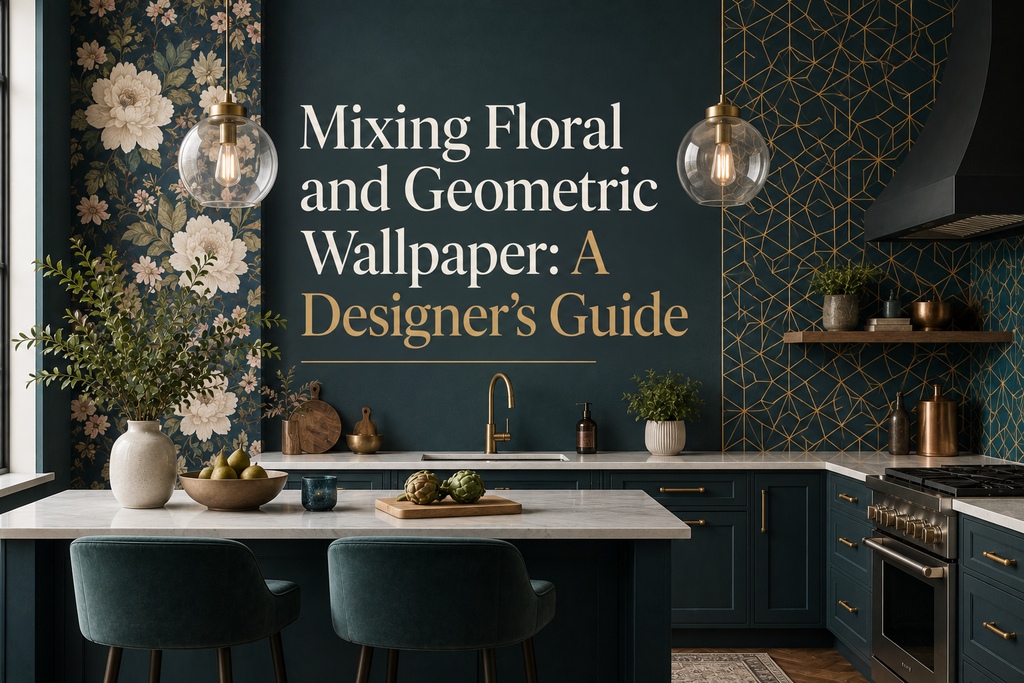
Mixing wallpaper patterns can completely change the character of an interior. But when two very different styles—such as floral and geometric wallpaper—enter the same design scheme, the question becomes one of balance.
Can soft botanical forms coexist with structured lines and repeating shapes? Absolutely.
In fact, floral and geometric wallpaper can create a particularly sophisticated combination because they bring opposite qualities to a room. Florals introduce movement, nature, and softness, while geometric patterns add structure, rhythm, and architectural definition.
The trick is not to make the two patterns match perfectly. It is to find the elements that make them belong together.
For homeowners designing modern American interiors, understanding how to balance pattern, color, scale, and texture can turn two seemingly unrelated wallpapers into a cohesive design story.
Why Floral and Geometric Wallpaper Work Together
Interior design often becomes more interesting when contrasting elements are placed side by side.
Floral patterns tend to feel organic. Their curves, leaves, stems, and irregular shapes create a sense of movement.
Geometric patterns are more structured. Lines, grids, arches, diamonds, circles, and repeating forms introduce order.
That contrast creates visual tension—but when controlled, it becomes a strength.
A floral wallpaper can soften an otherwise angular room, while geometric wallpaper can prevent an organic interior from feeling overly traditional.
Instead of competing, the two patterns can balance one another.
The First Rule: Choose a Visual Hierarchy
The easiest way to make multiple wallpaper patterns work is to decide which one should attract the most attention.
One pattern should lead. The other should support it.
For example:
Statement floral + subtle geometric
or
Bold geometric + understated botanical
This hierarchy gives the eye somewhere to focus.
If both wallpapers are equally dramatic, the room can quickly become visually overwhelming.
Before selecting your wallpapers, ask:
Which pattern should be the first thing I notice?
Once that decision is made, choosing the supporting wallpaper becomes much easier.
Use Color to Create a Connection
Color is often the strongest link between different wallpaper styles.
The floral and geometric designs don't need to share the exact same pattern or even the same number of colors. One or two common shades can be enough to make them feel connected.
Consider combinations such as:
-
Sage floral + warm cream geometric
-
Navy botanical + soft blue geometric
-
Terracotta floral + beige geometric
-
Charcoal botanical + taupe geometric
-
Olive floral + muted gray geometric
The repeated color creates continuity while allowing the patterns to remain distinct.
Build the Palette From the Floral Pattern
If you're starting with a colorful floral wallpaper, use it as the inspiration for the rest of the room.
Identify one of its secondary colors and carry that shade into the geometric wallpaper, upholstery, rug, or accessories.
This creates a layered palette rather than a perfectly matched one.
Pattern Scale Matters
Scale is one of the most important—and frequently overlooked—elements of pattern mixing.
Two large-scale patterns placed next to each other can compete intensely.
Instead, consider combining different visual scales.
For example:
Large floral + medium geometric + subtle texture
or:
Medium botanical + small geometric + solid-colored furnishings
The difference in scale creates hierarchy and gives each pattern room to breathe.
Large patterns make strong focal points. Smaller patterns tend to recede and support the overall composition.
Don't Make Every Room Equally Bold
A home feels more sophisticated when pattern intensity changes from room to room.
You don't need dramatic wallpaper everywhere.
A home might feature:
Living Room
A refined geometric pattern creates structure and establishes the overall design direction.
Dining Room
A dramatic botanical wallpaper becomes the focal point.
Bedroom
A softer floral pattern creates a more relaxed atmosphere.
Hallway
A subtle textured wallcovering connects the spaces.
This variation creates rhythm throughout the home.
Instead of walking from one statement wall to another, the eye experiences a sequence of stronger and quieter moments.
Floral Wallpaper Can Soften Contemporary Interiors
Modern interiors often feature strong architectural lines.
Think:
-
Rectangular furniture
-
Minimal cabinetry
-
Linear lighting
-
Metal details
-
Large windows
-
Clean architectural forms
A floral wallpaper can introduce an organic counterpoint.
Large leaves, flowing stems, painterly flowers, or abstract botanical forms can soften these harder lines without making the interior feel overly traditional.
This is especially effective when the floral design itself has a contemporary interpretation.
Geometric Wallpaper Can Modernize Floral Interiors
The relationship works in the opposite direction as well.
A floral-heavy interior can sometimes feel traditional if every decorative element uses organic motifs.
Introducing a geometric wallpaper can add structure and contemporary energy.
This works especially well with:
-
Oversized botanical prints
-
Painterly florals
-
Stylized flowers
-
Abstract leaves
-
Vintage-inspired botanical designs
The geometric pattern becomes a visual counterpoint that keeps the overall room feeling current.
Think Beyond Traditional Florals
"Floral wallpaper" doesn't necessarily mean tiny flowers or traditional bouquets.
Modern floral wallcoverings can feature:
-
Oversized leaves
-
Abstract flowers
-
Botanical line drawings
-
Painterly foliage
-
Stylized petals
-
Tropical forms
-
Organic silhouettes
These interpretations can work beautifully with contemporary geometric patterns.
If you're concerned that floral wallpaper might feel too traditional, look for designs with simplified shapes, unusual scale, or restrained color palettes.
Choose the Right Geometric Pattern
Geometric wallpaper also comes in many different personalities.
A delicate geometric pattern can act almost like a texture.
A strong architectural design can become the main focal point.
Depending on the room, you might consider:
-
Linear patterns
-
Arches
-
Grids
-
Diamonds
-
Circles
-
Hexagons
-
Abstract geometry
-
Repeating blocks
The right choice depends on the floral pattern you're pairing it with.
For example, a highly detailed botanical design may benefit from a simple geometric pattern. Conversely, a minimalist floral silhouette could support a more expressive geometric design.
Texture Can Become the Bridge
You don't always need another printed pattern to connect floral and geometric wallpaper.
Texture can play the role of a visual bridge.
A textured wallcovering can provide a quieter surface between two stronger patterns, preventing the room from feeling overloaded.
Consider combining:
Floral wallpaper + textured wallcovering + geometric wallpaper
This creates three distinct layers:
-
Organic movement
-
Subtle depth
-
Structured rhythm
Texture can be particularly effective in transitional spaces such as hallways, stairways, or connecting areas.
Consider the Furniture Shapes
Wallpaper should work with the shapes already present in your room.
If your furniture is primarily curved and organic, geometric wallpaper can introduce useful structure.
If your room contains lots of angular furniture and straight architectural lines, floral wallpaper can soften the composition.
For example:
Angular sofa + rectangular coffee table + geometric wallpaper
may feel overly linear if there are no softer elements.
Introducing a botanical wallpaper or organic artwork can help balance the room.
Likewise, an interior filled with curved furniture and organic accessories can benefit from geometric wallpaper that introduces definition.
Don't Forget Sightlines
One wallpaper might look perfect in isolation but feel different when viewed from another room.
This matters particularly in:
-
Open-plan homes
-
Homes with wide doorways
-
Long hallways
-
Connected living and dining areas
-
Homes with open staircases
Stand in one room and look toward another.
Ask yourself:
Do these patterns compete, complement, or simply coexist?
You don't need every visible wallpaper to match.
They simply need to feel like part of the same overall palette.
Open-Plan Interiors Need More Restraint
Open-plan spaces are particularly sensitive to pattern mixing because multiple areas are visible simultaneously.
A good approach is to establish one dominant pattern and use quieter wallcoverings elsewhere.
For example:
Living area: subtle geometric
Dining area: statement floral
Kitchen transition: textured neutral
The patterns are different, but their visual weight is controlled.
This approach also helps define separate zones without physically separating them.
Use Wallpaper to Define Zones
Wallpaper can be an effective architectural tool.
Instead of thinking of wallpaper simply as something that covers walls, consider how it can help define a function.
A floral wallpaper can make a dining area feel more intimate.
A geometric pattern can establish a sophisticated home office.
A textured wallcovering can create a calm bedroom backdrop.
This is especially useful when one large room serves several purposes.
Coordinate With Materials
Color and pattern are only part of the equation.
Materials also influence how wallpaper combinations feel.
Floral and geometric wallpaper can become more cohesive when supported by complementary materials such as:
-
Natural wood
-
Stone
-
Linen
-
Bouclé
-
Woven textiles
-
Brushed metal
-
Glass
-
Matte finishes
For example, a botanical wallpaper paired with warm wood and linen can create a relaxed atmosphere, while the addition of geometric wallpaper and metal accents can shift the room toward a more contemporary aesthetic.
Keep the Rest of the Room Under Control
If your wallpaper already provides significant visual interest, furniture and accessories don't need to compete with it.
This doesn't mean everything else has to be plain.
Instead, create a hierarchy.
If the wallpaper is highly detailed, choose simpler upholstery.
If the wallpaper is subtle, you can introduce more expressive furniture or artwork.
The goal is to prevent the room from becoming a collection of unrelated focal points.
A Simple Designer Formula
If you're unsure how to begin mixing floral and geometric wallpaper, try this approach.
Step 1: Pick Your Hero Pattern
Choose the wallpaper you absolutely love. This becomes the starting point for the room or home.
Step 2: Identify a Shared Color
Find one color from the hero wallpaper that can appear in the supporting pattern.
Step 3: Change the Scale
If your floral wallpaper is large-scale, choose a smaller geometric pattern—or vice versa.
Step 4: Adjust the Visual Intensity
One pattern should be stronger than the other.
Step 5: Add Texture
Use textured wallcoverings, fabrics, rugs, or natural materials to create breathing room.
Step 6: Check the Sightlines
Look at the wallpapers together from connecting rooms before making a final decision.
This process removes much of the guesswork from pattern mixing.
Examples of Successful Combinations
Modern Botanical + Fine Geometry
A large-scale botanical design paired with a delicate geometric pattern can create a refined contemporary interior.
The botanical becomes the focal point while the geometry adds subtle structure.
Dark Floral + Warm Neutral Geometry
Dark floral wallpaper can create drama, while a warm neutral geometric design provides balance.
This combination works particularly well in dining rooms and entertaining spaces.
Soft Floral + Bold Geometry
A restrained floral pattern can balance a stronger geometric design.
This approach works especially well when the geometric wallpaper is the dominant element.
Botanical + Textured Neutral + Geometry
For a more layered interior, introduce texture between the two patterns.
This creates a gradual transition rather than an abrupt change.
What to Avoid
Using Two Equally Dominant Patterns
If both designs demand attention, the room can feel chaotic.
Give one pattern the lead.
Ignoring Undertones
A cool gray geometric pattern may not work well with a warm beige floral design even if both appear "neutral."
Always compare samples together.
Using the Same Pattern Scale
Large floral plus large geometric can create unnecessary competition.
Varying scale usually creates more balance.
Adding Too Many Other Patterns
Remember that rugs, curtains, upholstery, artwork, and accessories can also introduce pattern.
Wallpaper doesn't exist in isolation.
Matching Everything Too Closely
A successful interior doesn't need every element to look like it came from the same collection.
A little contrast creates personality.
Can Floral and Geometric Wallpaper Work in Every Home?
Yes, but the specific combination should respond to the architecture and style of the home.
In a traditional interior, consider refined botanical patterns and elegant geometric designs.
In a contemporary home, abstract florals and architectural geometry can create a stronger statement.
In a transitional interior, combine classic floral inspiration with restrained geometric patterns and sophisticated textures.
The technique is flexible because both floral and geometric wallpaper come in an enormous range of styles.
Why Walloro?
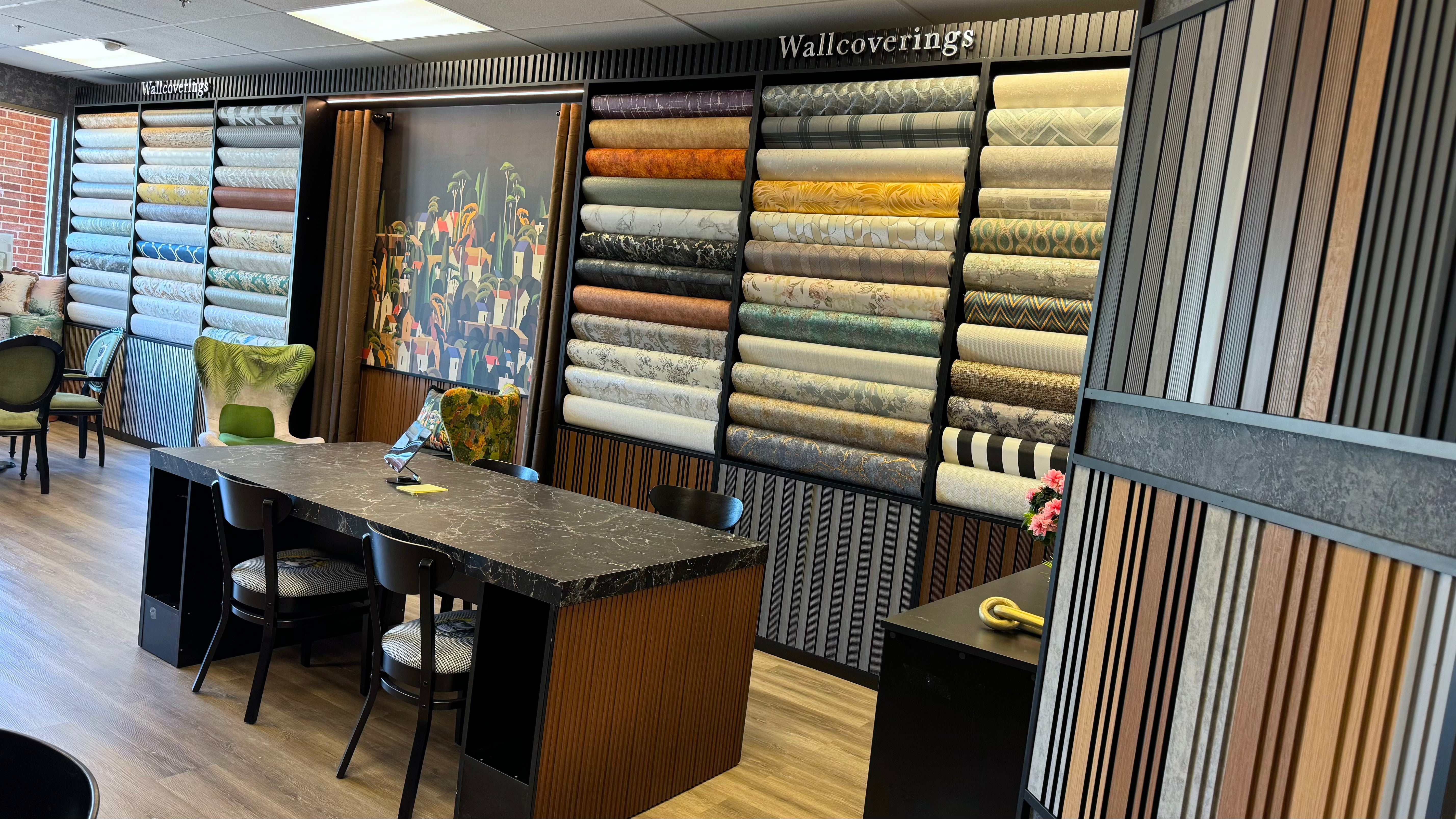
Walloro approaches wallcovering as an important part of the overall interior rather than an afterthought.
The right wallpaper can establish color, introduce texture, define a focal point, and influence how furniture and architectural elements relate to one another.
For American homeowners looking to create distinctive interiors, mixing floral and geometric designs offers a way to move beyond matching sets and create spaces with more personality.
The objective isn't to follow a rigid formula. It is to understand how different patterns interact and then use that knowledge to create an environment that feels intentional.
Frequently Asked Questions
Can floral and geometric wallpaper really work together?
Yes. The combination works particularly well when the designs share a color connection and have different visual scales or levels of intensity.
Should floral or geometric wallpaper come first?
Start with whichever pattern you love most or want to use as the focal point. Then select the second wallpaper to support it.
Do floral and geometric wallpapers need to match?
No. They need to coordinate, not necessarily match. Shared colors, complementary scales, and compatible design styles are often enough.
Can I use both wallpapers in the same room?
Yes. Consider using one as the dominant wallcovering and the other as an accent, or use them to visually define separate zones.
What if both wallpapers are bold?
Use them carefully. If both are strong, introduce differences in scale, simplify the furniture and accessories, and make sure they share a cohesive color palette.
Does textured wallpaper work with floral and geometric patterns?
Absolutely. Texture can provide a visual pause between stronger patterns and add depth without introducing another competing motif.
Final Thoughts
Mixing floral and geometric wallpaper isn't about forcing two different styles to match.
It's about creating a relationship between them.
Use color to connect, scale to create hierarchy, texture to add depth, and contrast to give the room personality.
A floral wallpaper can soften a structured interior. A geometric design can give an organic space a more contemporary edge. Together, they can create interiors that feel layered, sophisticated, and distinctly personal.
The best combinations aren't necessarily the most predictable ones. They're the ones where every pattern has a role—and where those patterns work together to tell one cohesive design story.
For Walloro, that is the real potential of wallpaper: not simply decorating a wall, but creating a more considered relationship between the elements of an entire interior.