

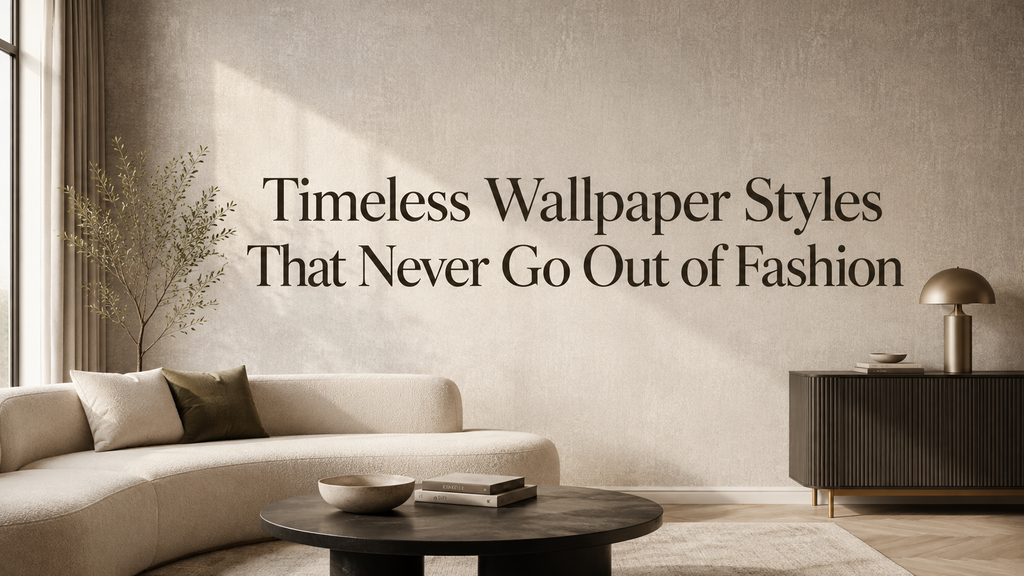
Timeless Wallpaper Styles That Never Go Out of Fashion
Interior design trends move quickly.
Colors become popular, patterns dominate social media, and certain styles suddenly appear in almost every new project. But while trends can be useful for inspiration, not every design choice needs to follow the latest aesthetic.
Wallpaper is one of the biggest decisions in this category.
Unlike a cushion or decorative accessory, wallcovering can define an entire room. That's why many homeowners ask an important question before committing:
Which wallpaper styles will still look beautiful years from now?
The answer isn't limited to beige walls or understated patterns.
Truly timeless wallpaper comes in many forms, from tactile neutrals and organic patterns to classic stripes, sophisticated geometrics, and dimensional textures.
What these styles have in common is that they don't depend entirely on a particular design moment.
At Walloro, we believe timeless interiors aren't about avoiding personality. They're about choosing design elements with enough depth and versatility to evolve with your home.
What Makes a Wallpaper Style Timeless?
A timeless wallpaper doesn't necessarily disappear into the background.
It can be bold.
It can be dark.
It can be textured.
It can even be highly decorative.
The difference is that its appeal comes from enduring design principles rather than a short-lived trend.
Some of the qualities that contribute to longevity include:
-
Balanced proportions
-
Sophisticated color
-
Natural inspiration
-
Refined texture
-
Versatile pattern scale
-
Architectural compatibility
-
Material depth
-
Ability to work with changing furniture
A timeless wallpaper should feel appropriate today without making the room look trapped in today's trends.
1. Textured Wallpaper
If there's one wallpaper category with exceptional staying power, it's texture.
Textured wallcoverings can imitate or reinterpret materials such as:
-
Linen
-
Woven fabric
-
Plaster
-
Stone
-
Natural fibers
-
Handcrafted surfaces
Unlike highly specific printed patterns, texture creates visual interest through light and shadow.
That gives it remarkable versatility.
A textured wall can work in a contemporary apartment just as easily as it can in a traditional home.
2. Linen-Inspired Wallpaper
Linen has long been associated with relaxed sophistication.
Wallpaper inspired by linen brings that quality to the wall without requiring actual textile installation.
Its subtle surface variation can create warmth while remaining visually restrained.
Linen-inspired wallpaper works particularly well with:
-
Natural wood
-
Neutral upholstery
-
Contemporary furniture
-
Coastal interiors
-
Transitional design
-
Minimalist spaces
Because it doesn't rely on a highly specific motif, it can remain relevant through changing design trends.
3. Tone-on-Tone Wallpaper
Timeless doesn't have to mean plain.
Tone-on-tone wallpaper uses closely related colors to create subtle pattern and depth.
Examples include:
-
Cream on ivory
-
Beige on taupe
-
Gray on soft gray
-
Olive on muted green
-
Sand on warm beige
The low contrast makes the wall adaptable.
Furniture and artwork can change without necessarily clashing with the wallpaper.
4. Organic and Nature-Inspired Patterns
Nature has influenced interiors for centuries.
Leaves, branches, flowers, vines, stone formations, and organic shapes continue to appear in design because they provide a connection to the natural world.
The most timeless versions tend to avoid overly literal or exaggerated interpretations.
Instead, they use:
-
Balanced composition
-
Muted colors
-
Natural movement
-
Sophisticated scale
This allows the design to feel inspired by nature rather than tied to a specific trend.
5. Classic Stripes
Stripes are one of the most enduring patterns in interior design.
They can feel:
-
Traditional
-
Coastal
-
Contemporary
-
Architectural
-
Minimalist
depending on their proportions and colors.
Vertical stripes can emphasize height.
Horizontal stripes can reinforce width.
Subtle stripes can create rhythm without overwhelming the room.
This flexibility gives stripes exceptional longevity.
6. Subtle Geometric Wallpaper
Geometry isn't inherently trendy.
Many of the fundamental geometric forms used in wallpaper have been part of architecture and decorative arts for generations.
Circles, grids, arches, diamonds, lines, and repeating structures can all create sophisticated wallcoverings.
The key is restraint.
A balanced geometric pattern can remain relevant.
A highly specific interpretation of a social-media trend may not.
7. Plaster-Inspired Wallpaper
Plaster-inspired surfaces have become increasingly popular, but their visual foundation is much older than the current trend cycle.
They reference traditional architectural surfaces while fitting naturally into modern interiors.
Soft variations and mineral-like textures can create the impression of handcrafted walls.
This makes them especially useful when you want a room to feel:
-
Architectural
-
Refined
-
Minimal
-
Organic
-
Sophisticated
without adding an elaborate pattern.
8. Damask With a Modern Interpretation
Damask is one of the classic decorative patterns.
Its history is strongly associated with traditional luxury interiors, but modern interpretations can make it surprisingly versatile.
Contemporary damask designs may simplify:
-
Contrast
-
Scale
-
Color
-
Ornamentation
This allows the underlying elegance of the pattern to remain while making the wallcovering compatible with modern furniture.
9. Botanical Wallpaper
Botanical wallpaper deserves its own category because it can range from extremely traditional to distinctly contemporary.
A timeless botanical design usually focuses on natural rhythm rather than novelty.
Think delicate branches, understated foliage, or organic silhouettes.
The right botanical wallpaper can add personality while maintaining a sophisticated atmosphere.
It can work particularly well in:
-
Bedrooms
-
Dining rooms
-
Living rooms
-
Entryways
-
Home offices
10. Warm Neutral Wallpaper
Neutral wallpaper is one of the easiest ways to create a flexible foundation.
But warm neutrals often have an advantage over stark whites or highly cool grays.
Consider:
-
Sand
-
Cream
-
Ivory
-
Beige
-
Warm taupe
-
Soft caramel
-
Natural stone tones
These shades work with both warm and contemporary furniture palettes.
They can also make textured wallcoverings appear more tactile.
11. Deep, Rich Colors
Timeless wallpaper isn't limited to light colors.
Deep green, navy, charcoal, brown, and burgundy can create sophisticated interiors with considerable longevity.
The secret is choosing colors with depth rather than simply selecting whatever shade happens to be fashionable.
A rich color paired with an elegant texture can feel luxurious for years.
12. Marble and Stone-Inspired Designs
Natural stone has always been part of architecture.
Wallpaper inspired by stone and marble can bring that visual language to spaces where real stone may not be practical.
Subtle stone-inspired textures can work particularly well in contemporary interiors.
The goal is usually not to imitate every detail of a natural slab.
Instead, refined designs capture the movement, tonal variation, and material character of stone.
13. Abstract Wallpaper With Organic Movement
Abstract wallpaper doesn't have to look trendy.
Some of the most enduring abstract designs are inspired by natural movement, architecture, brushwork, mineral formations, or atmospheric landscapes.
These designs can provide artistic character without committing the room to a recognizable motif.
This makes them particularly useful for contemporary homes.
14. Small-Scale Repeating Patterns
Small-scale patterns can create subtle rhythm across a wall.
They work particularly well when you want the wall to have character without becoming the dominant feature.
This style can be useful in:
-
Bedrooms
-
Hallways
-
Home offices
-
Small living spaces
The pattern becomes part of the overall texture of the room rather than a separate statement.
15. Large-Scale Patterns Can Also Be Timeless
Timeless doesn't mean small.
Large-scale wallpaper can be incredibly sophisticated.
The key is proportion.
A large botanical, abstract, or geometric design can create a dramatic focal point without feeling temporary if its colors and composition are carefully balanced.
Sometimes a bold wall has more longevity than a safe one because it expresses the architecture of the room rather than a trend.
16. Embossed Wallpaper
Embossing gives wallpaper physical dimension.
Rather than relying entirely on printed color, the surface itself creates visual interest.
Light moves across the raised pattern throughout the day.
This creates a dynamic wall that can feel different under morning sunlight, afternoon light, and evening illumination.
Because the appeal comes from materiality and depth, embossed wallpaper can have strong long-term potential.
17. Why Texture Often Outlasts Trends
Trends are frequently based on specific colors or recognizable motifs.
Texture is different.
A wall can have:
-
Soft relief
-
Woven appearance
-
Mineral variation
-
Linen character
-
Architectural depth
without immediately belonging to a specific year.
This is one reason textured wallcoverings are so useful for long-term interiors.
18. Timeless Wallpaper Should Work With Different Furniture
A useful test for any wallpaper is to imagine the room changing.
What happens if you replace the sofa?
What if the rug changes?
What if you switch from brass to black hardware?
What if your furniture becomes more contemporary?
If the wallpaper can accommodate those changes, it has greater design longevity.
Versatility is one of the strongest indicators of timelessness.
19. Don't Make Every Element Timeless
Interestingly, you don't need every part of the room to be permanent.
A timeless wallpaper can provide the foundation while more temporary elements evolve.
For example:
Timeless wallcovering + trend-forward furniture
or
Classic wallcovering + contemporary artwork
This approach allows you to experiment without redesigning the entire room every few years.
20. Timeless Doesn't Mean Boring
Perhaps the biggest misconception about timeless design is that it must be conservative.
It doesn't.
A timeless room can have:
-
Dramatic color
-
Bold texture
-
Strong pattern
-
Statement furniture
-
Artistic details
The difference is that the elements have a sense of proportion and purpose.
The room feels designed rather than assembled around whatever happens to be popular.
How to Choose a Wallpaper That Won't Feel Dated
1. Look at the Architecture
Choose something that complements the home's existing character.
2. Study the Pattern Scale
Make sure the design feels proportional to the room.
3. Consider Texture
Tactile surfaces often provide more lasting appeal.
4. Look Beyond Current Trends
Ask whether you genuinely like the design or simply see it everywhere.
5. Consider Multiple Furniture Styles
Imagine the wall with both your current furniture and possible future changes.
6. Test the Sample
View it in daylight and artificial light.
7. Look at the Whole Room
Wallpaper should work with flooring, furniture, lighting, trim, and accessories.
Timeless Wallpaper by Interior Style
| Interior Style | Wallpaper Directions |
|---|---|
| Modern | Textured, abstract, subtle geometric |
| Minimalist | Linen-inspired, plaster, tone-on-tone |
| Traditional | Damask, botanical, stripes |
| Transitional | Organic, refined geometric, textured |
| Contemporary Luxury | Embossed, deep tones, sophisticated abstract |
| Coastal | Soft stripes, organic texture, muted neutrals |
| Organic Modern | Natural textures, botanical, earthy tones |
| Classic | Damask, stripes, refined florals |
How Wallpaper Can Evolve With Your Home
One of the biggest advantages of a timeless wallcovering is flexibility.
Your design preferences may change.
You may move from:
Minimalist → Contemporary
or
Traditional → Transitional
or
Neutral → More Colorful
A versatile wallcovering can often remain in place while the surrounding design evolves.
Change the artwork.
Change the furniture.
Change the lighting.
Change the accessories.
The wall continues to provide continuity.
Why Walloro Believes in Design Beyond Trends
At Walloro, we believe wallpaper should do more than reflect what is popular today.
A great wallcovering can become part of the identity of a home.
Texture can create depth.
Pattern can create rhythm.
Color can establish atmosphere.
And materiality can give a room architectural character.
The objective isn't to eliminate trends entirely.
Trends can be inspiring.
The goal is to balance contemporary design with elements that have enough visual and material depth to remain relevant long after the trend cycle ends.
Frequently Asked Questions
What wallpaper styles never go out of fashion?
Textured, linen-inspired, tone-on-tone, organic, botanical, striped, subtle geometric, and refined traditional designs generally have strong long-term appeal.
Is textured wallpaper timeless?
Yes. Texture is one of the most adaptable characteristics because it adds depth without relying entirely on a specific pattern or trend.
Are neutral wallpapers always timeless?
Not necessarily. A neutral wallpaper can still look dated if its pattern, scale, or finish is strongly associated with a particular trend.
Can bold wallpaper be timeless?
Absolutely. Bold wallpaper can remain timeless when its color, scale, composition, and relationship to the architecture are well balanced.
Is floral wallpaper outdated?
No. Botanical and floral motifs have been used in interiors for centuries. The specific style, scale, and color determine whether a design feels contemporary or dated.
What is the safest timeless wallpaper choice?
A sophisticated textured or tone-on-tone wallcovering is among the most adaptable options, particularly when paired with a versatile neutral or earthy palette.
Final Thoughts
The most timeless wallpaper isn't necessarily the quietest one.
It is the one that has enough character to remain interesting and enough versatility to remain relevant.
Texture, natural inspiration, classic stripes, refined geometrics, tone-on-tone patterns, architectural surfaces, and sophisticated colors all have the potential to outlast short-lived trends.
Instead of asking only, "Is this wallpaper fashionable right now?"
Ask a better question:
"Will this design still feel right when the rest of my room changes?"
If the answer is yes, you've probably found something worth keeping.
At Walloro, that's what timeless wall design is ultimately about: creating walls that don't simply belong to today's interiors, but continue to belong to your home for years to come.