

Transform Your Space With Today's Hottest Wallcovering Styles
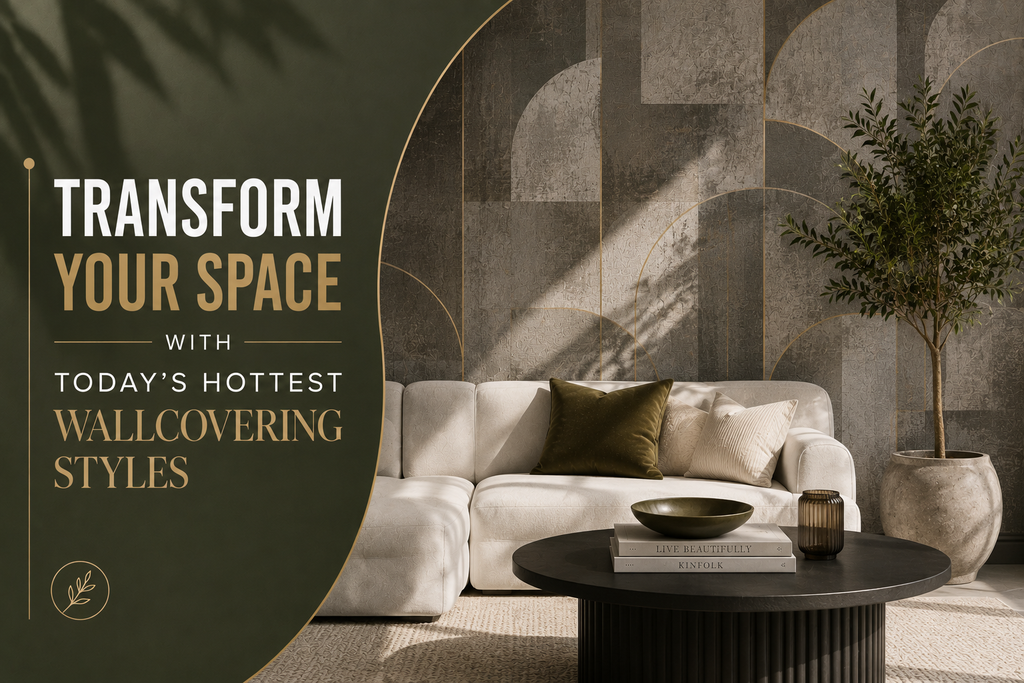
- Abstract leaves
- Organic lines
- Botanical silhouettes
- Flowing branches
- Earth-inspired textures
- Mineral patterns
- Natural color variations
These designs introduce movement and softness while remaining compatible with modern furniture.
They can also help create a visual connection between indoor spaces and the natural environment outside.
4. Warm Neutral Wallpaper
Cool gray and stark white interiors are making room for warmer neutrals.
Cream, ivory, sand, taupe, warm beige, and clay-inspired tones can make rooms feel more comfortable and layered.
The real opportunity comes when these colors are combined with texture.
A plain beige wall may feel simple.
A dimensional beige wallcovering can feel sophisticated.
This is one of the easiest ways to create a sense of quiet luxury without relying on dramatic colors.
5. Tonal Patterns
Not every patterned wall needs high contrast.
Tonal wallpaper uses closely related shades to create visual movement while maintaining a calm overall appearance.
Imagine a warm taupe wall with a slightly darker geometric relief.
Or an ivory surface with a subtle botanical pattern.
From a distance, the room feels quiet.
Closer inspection reveals the detail.
This approach works particularly well for homeowners who want personality without sacrificing a restrained aesthetic.
6. Oversized Patterns
Large-scale wallpaper patterns can completely change the atmosphere of a room.
Instead of creating many small visual details, an oversized pattern becomes a major compositional element.
Large botanical forms can create an immersive bedroom.
An oversized geometric design can give a dining room a more architectural character.
An abstract pattern can function almost like a large-scale piece of artwork.
The important consideration is proportion.
A large pattern needs enough wall area to breathe.
7. Bold Colors Are Returning
Neutral interiors remain popular, but homeowners are becoming more confident with color.
Deep greens, rich blues, warm terracotta, earthy browns, and other saturated tones can create a dramatic atmosphere.
Dark wallpaper can be especially effective in rooms where you want intimacy rather than visual openness.
Consider using stronger color in:
- Dining rooms
- Studies
- Bedrooms
- Powder rooms
- Reading areas
A bold wall doesn't necessarily make a room feel smaller.
Sometimes it simply gives the room more character.
8. Wallpaper as an Architectural Tool
One of the most interesting developments in wallcovering is its increasing connection to architecture.
Wallpaper can emphasize:
- Fireplace walls
- Arches
- Alcoves
- Built-in shelving
- Staircases
- Bed walls
- Dining zones
Instead of applying wallpaper simply because a wall is empty, designers are using it to highlight the structure of the room.
This creates a more intentional result.
9. Open-Concept Spaces Need Visual Boundaries
Open floor plans can sometimes feel visually undefined.
Wallpaper can introduce distinction without creating physical barriers.
A different wallcovering can visually establish a dining area within a larger living space.
A textured wall can define a home office.
A statement pattern can mark an entry area.
This allows the floor plan to remain open while giving each zone its own personality.
10. Small Rooms Are Becoming Design Opportunities
A compact space doesn't have to be visually conservative.
Powder rooms, hallways, small bedrooms, and home offices can be excellent places to experiment.
Because these rooms are smaller, a bold wallcovering can create a concentrated design experience.
Instead of trying to make every small space disappear, consider giving it a distinct identity.
A dramatic wallpaper can make a tiny room feel intentional, memorable, and complete.
11. Material-Inspired Wallpaper
Natural materials are beautiful, but using real stone, wood, or specialty finishes everywhere isn't always practical.
Material-inspired wallpaper offers another approach.
Designers are using wallcoverings that reference:
- Stone
- Marble
- Plaster
- Wood grain
- Woven fibers
- Mineral surfaces
- Natural fabrics
These designs can bring the visual character of architectural materials into interiors while maintaining the flexibility of wallpaper.
12. Organic Shapes Are Softening Modern Interiors
Contemporary architecture often relies on straight lines and clean geometry.
Organic wallpaper patterns can provide contrast.
Curved lines, flowing forms, irregular motifs, and natural silhouettes introduce movement without disrupting the simplicity of modern interiors.
This balance between structure and softness is one reason organic design continues to resonate with homeowners.
13. Maximalism Is Becoming More Personal
Maximalism isn't simply about using more.
The current approach is more intentional.
Instead of combining every pattern available, homeowners are selecting a strong wallpaper and allowing it to establish the personality of the room.
A dramatic wallcovering can then be balanced with simpler furniture, restrained accessories, and carefully controlled lighting.
The result feels expressive rather than chaotic.
14. Wallpaper and Lighting Are Working Together
The appearance of a wallcovering can change significantly depending on lighting.
Natural daylight reveals color differently from artificial light.
Embossed surfaces become more dimensional when illuminated from the side.
Metallic or reflective finishes respond dramatically to evening lighting.
Dark wallpaper can become richer under warm lamps.
This is why choosing wallpaper shouldn't happen independently from the room's lighting plan.
The best wallcoverings become part of the lighting experience.
15. Ceilings Are Getting More Attention
Why stop at the walls?
Ceiling treatments are becoming an increasingly interesting way to create immersive interiors.
Wallpaper on the ceiling can work particularly well in:
- Bedrooms
- Dining rooms
- Powder rooms
- Entryways
A subtle textured ceiling can create quiet sophistication.
A bold pattern can create a dramatic enclosed effect.
Either way, it introduces another surface into the design conversation.
How to Choose a Trend Without Making Your Home Feel Dated
Following trends doesn't mean committing your home to a short-lived aesthetic.
The safest approach is to choose trends that are connected to timeless design principles.
Texture, natural inspiration, tonal color, sophisticated neutrals, and thoughtful pattern scale are examples of trends that can remain relevant because they work with a wide range of interiors.
Before choosing a fashionable design, ask:
Does it work with my architecture?
Does it complement my furniture?
Will I still enjoy seeing it every day?
Does the room have enough visual balance?
If the answer is yes, you're not simply following a trend.
You're using a current design idea in a personal way.
How Wallcovering Can Transform Different Rooms
Living Room
Choose textured neutrals, sophisticated patterns, or organic designs that complement furniture rather than compete with it.
Bedroom
Consider calming textures, tonal patterns, or immersive botanical designs.
Dining Room
A stronger pattern or deeper color can create a more intimate atmosphere.
Home Office
Textured surfaces and refined geometric designs can create a polished backdrop.
Powder Room
This is an ideal place to experiment with bold color, dramatic pattern, or unexpected texture.
Hallway
Use wallpaper to turn an overlooked transition space into a memorable design element.
Don't Forget the Furniture
Wallpaper shouldn't be chosen in isolation.
Look at the room as a complete composition.
A strong pattern may need simpler furniture.
A subtle textured wall can support more expressive furnishings.
Warm wallpaper can complement natural wood.
Cooler colors may work with metal and glass.
The goal isn't to make every element match.
It's to make the elements relate to one another.
Why Walloro Is Designed for Modern Interiors
At Walloro, we approach wallcovering as an essential part of interior design.
Our collections explore the relationship between texture, pattern, color, material, and light to give homeowners more ways to create spaces with personality.
From dimensional embossed surfaces and sophisticated neutrals to organic patterns and expressive contemporary designs, Walloro wallcoverings are intended to work across a wide range of residential interiors.
The goal isn't simply to make a wall look different.
It's to help make the entire room feel more intentional.
Frequently Asked Questions
What wallpaper styles are popular right now?
Textured wallpaper, embossed finishes, warm neutrals, nature-inspired patterns, tonal designs, oversized motifs, and rich colors are among the strongest directions in contemporary interiors.
Is textured wallpaper still in style?
Yes. Texture remains highly relevant because it adds depth and sophistication without requiring dramatic patterns or colors.
Can bold wallpaper work in a small room?
Absolutely. Small rooms can be ideal for dramatic wallcoverings, particularly when the rest of the interior is carefully balanced.
Are nature-inspired wallpapers still popular?
Yes. Organic forms, botanical patterns, earthy colors, and natural textures continue to have lasting appeal because they connect contemporary interiors with familiar natural elements.
Can wallpaper make a room look more luxurious?
A sophisticated texture, refined pattern, or dimensional finish can contribute to a more layered and premium-looking interior. The result also depends on lighting, furniture, and overall composition.
Final Thoughts
The hottest wallcovering styles aren't about choosing whatever happens to be popular this season.
They're about discovering new ways to make walls part of the experience of a home.
Texture adds depth.
Embossing adds dimension.
Nature-inspired patterns add softness.
Warm neutrals create comfort.
Bold designs create personality.
And thoughtful applications can turn overlooked architectural surfaces into focal points.
At Walloro, we believe the most successful interiors aren't simply decorated.
They're designed from the walls outward.