


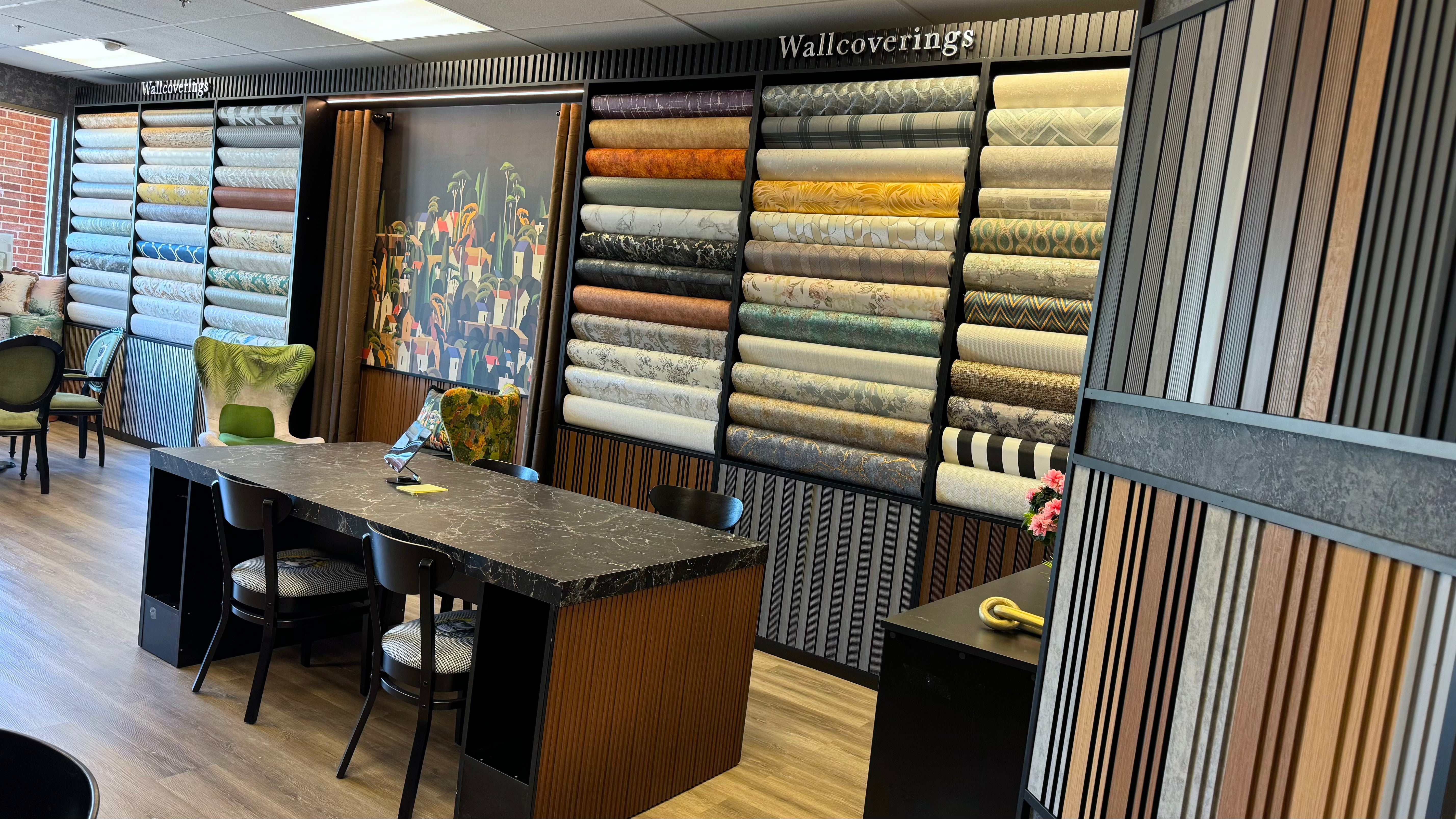

Maximizing Impact: Wallpaper Solutions for High Ceilings
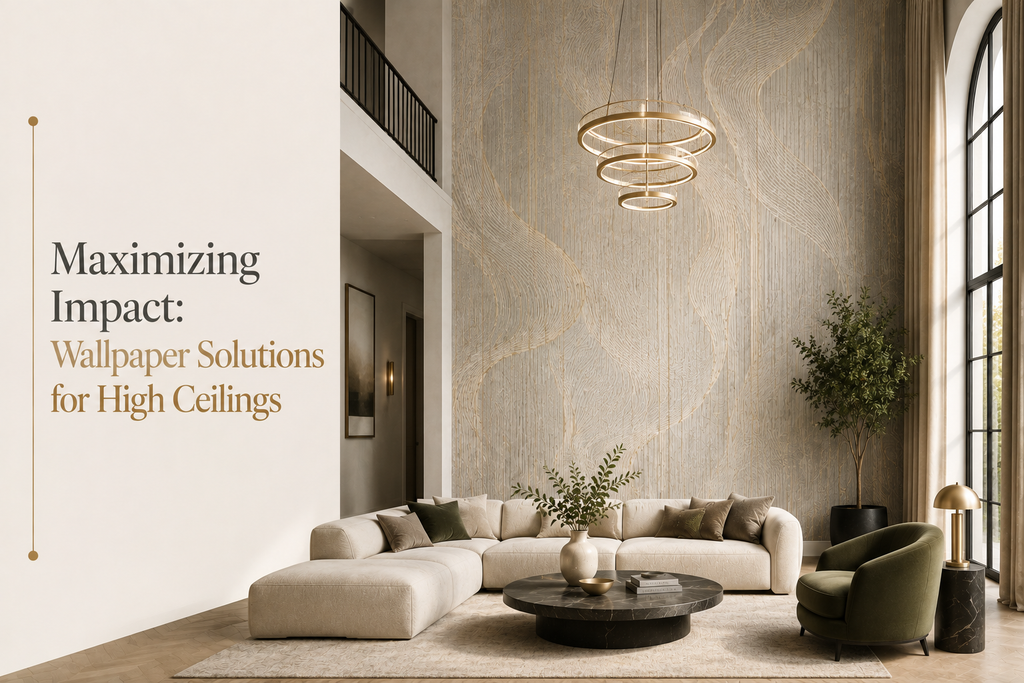
High ceilings give a home an immediate sense of scale.
They make rooms feel open, allow architectural details to stand out, and create expansive vertical surfaces that can become powerful design features. But that same height can make a room difficult to balance.
A wall that extends several feet above eye level can easily feel unfinished when treated as an afterthought.
This is where wallpaper can make a significant difference.
Rather than simply covering a large wall, the right wallcovering can use height as a design advantage. Pattern can establish rhythm, texture can add depth, and color can influence the perceived scale of the entire room.
At Walloro, we believe high ceilings shouldn't simply be filled.
They should be designed with intention.
Why High Ceilings Need a Different Wallpaper Strategy
A wallpaper pattern doesn't look the same on a standard eight- or nine-foot wall as it does on a much taller surface.
The additional height changes:
-
Pattern scale
-
Viewing distance
-
Visual rhythm
-
Lighting
-
Furniture relationships
-
Architectural balance
A small repeating pattern can become visually insignificant on a double-height wall.
A dramatic oversized pattern, on the other hand, may finally have enough room to reveal its full character.
This is why wallpaper selection should begin with the proportions of the room rather than the pattern alone.
1. Let Large-Scale Patterns Fill the Architecture
High ceilings create the perfect environment for large-scale wallpaper.
Oversized botanicals, abstract compositions, geometric forms, and architectural motifs can occupy a tall wall without feeling crowded.
Instead of seeing dozens of small repeats, the eye experiences the pattern as one larger composition.
This can give the wall the presence of artwork.
Large-scale designs are especially effective when the room already has substantial architectural features or furniture.
2. Use Vertical Patterns to Celebrate Height
If you love the dramatic feeling of a tall room, use wallpaper that reinforces it.
Vertical botanical stems, elongated geometric shapes, linear textures, and upward-moving motifs can direct the eye toward the ceiling.
This creates a strong architectural relationship between the wallpaper and the room.
However, this isn't always the right solution.
If the space already feels excessively tall, you may want to create more horizontal visual balance instead.
3. Create Horizontal Balance
High ceilings can sometimes make furniture feel visually low in the room.
A horizontal design strategy can help counteract this.
You can introduce horizontal elements through:
-
Wainscoting
-
Picture rails
-
Architectural molding
-
Horizontal pattern movement
-
Contrasting wall treatments
Wallpaper can sit above a decorative molding or paneling system, creating a visual division across the wall.
This can make the room feel more proportionate without changing the architecture.
4. Texture Is an Elegant Alternative to Bold Pattern
Not every high-ceilinged room needs a dramatic wallpaper.
Sometimes the architecture is already the statement.
In these cases, texture can be more effective.
A subtle linen-inspired wallcovering can soften an expansive wall.
A woven texture can introduce warmth.
A plaster-inspired finish can create architectural depth.
An embossed surface can add dimension while keeping the color restrained.
This approach works particularly well in minimalist and contemporary homes.
5. Use Embossing to Work With Light
Tall rooms often have larger windows and more complex lighting.
That makes them particularly suitable for dimensional wallpaper.
Embossed surfaces respond to light throughout the day.
Morning sunlight can reveal one level of relief.
Afternoon light can create different shadows.
Evening sconces can emphasize the raised pattern.
Instead of remaining visually static, the wall changes as the lighting changes.
This is one of the most effective ways to make a large wall feel alive.
6. Don't Be Afraid of Dark Colors
Large rooms with high ceilings can handle deeper colors surprisingly well.
Deep green, navy, charcoal, espresso, and other rich shades can give an expansive room greater visual weight.
Rather than making the room feel smaller in a negative sense, darker wallpaper can create intimacy.
This can be especially effective in:
-
Dining rooms
-
Libraries
-
Formal living rooms
-
Bedrooms
-
Media rooms
If the room feels too open or impersonal, a richer wallcovering may bring it back toward a more comfortable scale.
7. Light Wallpaper Can Preserve Openness
Of course, darker colors aren't the only option.
If you love the airy feeling of a high-ceilinged room, light wallpaper can preserve that quality.
Consider:
-
Warm ivory
-
Soft beige
-
Pale stone
-
Light taupe
-
Muted gray
-
Soft natural tones
A subtle texture can prevent the wall from feeling empty while maintaining the room's openness.
This approach works particularly well with large windows and natural materials.
8. Make a Double-Height Wall the Focal Point
A double-height wall is already visually important.
Instead of trying to decorate it with multiple small elements, consider making it one large statement.
A dramatic wallpaper can transform:
-
Fireplace walls
-
Entry walls
-
Staircase walls
-
Living room feature walls
-
Dining room walls
The wallcovering becomes the artwork.
This can actually simplify the rest of the room because fewer decorative elements are needed.
9. Murals Can Take Advantage of Vertical Space
High ceilings provide an ideal canvas for mural wallpaper.
A mural can use the entire wall as one continuous composition.
Nature-inspired scenes, abstract artwork, architectural imagery, and oversized botanical designs can create a sense of immersion.
The additional height allows the artwork to develop vertically.
Instead of looking like a repeated pattern, the wall becomes a visual narrative.
10. Use the Staircase as a Design Opportunity
Staircases are often difficult to decorate.
They're tall, narrow, and frequently interrupted by doors, railings, and changing angles.
Wallpaper can unify the entire vertical surface.
A subtle texture can provide continuity.
A botanical pattern can create movement.
A vertical geometric design can reinforce the staircase's direction.
Because installation can involve difficult heights and angles, professional application is particularly important in these spaces.
11. Think About the Ceiling Too
When walls are exceptionally tall, the ceiling becomes an important part of the composition.
Wallpaper doesn't necessarily have to stop at the wall.
A ceiling treatment can create a more immersive environment.
This can work particularly well in:
-
Dining rooms
-
Powder rooms
-
Libraries
-
Bedrooms
A subtle texture can create continuity.
A dramatic pattern can produce an unexpected architectural moment.
12. Coordinate Wallpaper With Architectural Details
High ceilings often come with significant architectural features.
Think about:
-
Crown molding
-
Columns
-
Beams
-
Wainscoting
-
Wall panels
-
Fireplace surrounds
-
Arched openings
Wallpaper should complement these features.
A highly decorative architecture may benefit from a quieter wallcovering.
A relatively simple architecture can support a more expressive design.
The goal is not to make the wallpaper compete with the building.
It's to make the two elements feel connected.
13. Consider Pattern Repeat Carefully
Pattern repeat becomes especially important on tall walls.
A small repeat may create an excessive number of visible repetitions.
A large repeat may create a more sophisticated composition.
Before choosing a wallpaper, understand:
-
Horizontal repeat
-
Vertical repeat
-
Pattern direction
-
Drop match or straight match
-
How the design will align around openings
This becomes even more important on double-height walls because mistakes are more visible.
14. View the Wallpaper From Across the Room
A wallpaper that looks beautiful from one foot away may look completely different from twenty feet away.
High-ceilinged rooms often have long viewing distances.
Step back.
Look at the sample from across the room.
Imagine how the pattern will behave when repeated across the entire wall.
Ask yourself whether the texture will remain visible.
Will the pattern still have enough impact?
Does the scale feel appropriate?
These questions can prevent a design from feeling too small once installed.
15. Use Lighting to Enhance the Wallpaper
High ceilings create opportunities for dramatic lighting.
Pendant lights, chandeliers, sconces, and architectural lighting can all interact with wallpaper.
Directional lighting can emphasize texture.
Wall sconces can highlight embossed details.
A large pendant can create shadows across a textured surface.
When selecting wallpaper, consider the lighting design as part of the overall composition.
16. Balance Wallpaper With Furniture Scale
A high ceiling can make standard furniture feel visually undersized.
The wallpaper should work with the furniture rather than exaggerating this imbalance.
Large sofas, tall artwork, substantial lighting fixtures, and statement furniture can help establish visual weight.
A large-scale wallpaper can then connect the walls with the furniture.
In contrast, a subtle texture can provide a quiet backdrop when the furniture already has significant presence.
17. Use Wallpaper to Define Zones
Large rooms with high ceilings are often open-plan.
Wallpaper can help establish visual zones without constructing physical walls.
For example:
A dining area can receive a patterned wallcovering.
The living area can remain painted.
A staircase can receive a textured treatment.
A reading nook can use a more immersive pattern.
This creates differentiation while maintaining architectural openness.
18. High Ceilings Can Support More Dramatic Contrast
Because tall rooms have more visual volume, they can often accommodate stronger contrast.
A deep wallpaper against light trim can create architectural definition.
A light textured wall against dark furniture can create balance.
A patterned wall behind a neutral sofa can establish a clear focal point.
Contrast gives the eye a place to land within a large space.
19. Don't Forget Natural Materials
High ceilings can sometimes make interiors feel cold if the room contains too many hard surfaces.
Natural materials can counterbalance this.
Consider combining wallpaper with:
-
Natural wood
-
Stone
-
Linen
-
Wool
-
Rattan
-
Brushed metal
A warm textured wallpaper can help connect these materials visually.
This is particularly effective in contemporary homes where architecture is clean but homeowners still want warmth.
20. Choose Wallpaper According to the Mood
Ultimately, the best wallcovering depends on the experience you want.
For an airy interior
Choose light colors and subtle textures.
For a dramatic interior
Choose rich colors and large-scale patterns.
For a sophisticated interior
Choose tonal textures and restrained contrast.
For a nature-inspired interior
Choose botanical forms and organic textures.
For a contemporary interior
Choose geometric patterns or architectural surfaces.
The ceiling height gives you possibilities.
Your design direction determines which one to use.
High-Ceiling Wallpaper Ideas by Room
Living Room
Use large-scale patterns or textured neutrals to connect the wall with substantial furniture.
Dining Room
Consider darker colors, dramatic embossing, or mural-style designs.
Bedroom
Use soft textures or immersive wallpaper to make the vertical space feel more intimate.
Entryway
A large-scale pattern can create an immediate first impression.
Staircase
Use vertical motifs or continuous textures to emphasize movement.
Home Library
Rich colors and tactile finishes can make the room feel sophisticated and enveloping.
How to Choose Wallpaper for a High-Ceilinged Home
Before ordering, consider these questions:
What is the actual ceiling height?
Measure rather than relying on visual estimates.
Is the room naturally bright or dark?
Lighting will influence your color and finish choice.
Do you want to emphasize the height?
Vertical patterns and large-scale compositions can help.
Do you want to visually balance the height?
Horizontal architectural elements and stronger visual divisions may help.
What is already happening architecturally?
Consider molding, beams, fireplaces, windows, and columns.
How will the wallpaper look from a distance?
Always evaluate the design at the scale of the actual room.
Why Walloro Designs for the Architecture, Not Just the Wall
At Walloro, we approach wallcovering as part of the larger interior composition.
Our collections explore sophisticated textures, dimensional surfaces, organic patterns, contemporary geometry, and carefully developed color palettes.
These qualities allow wallpaper to work with architecture rather than simply sit on top of it.
In a high-ceilinged home, the wall can become:
A backdrop.
A focal point.
A source of texture.
A visual transition.
Or even a piece of art.
The key is choosing the right treatment for the architecture and the way the room is lived in.
Frequently Asked Questions
Can wallpaper make a high-ceilinged room feel more balanced?
Yes. Pattern scale, color, texture, and architectural divisions can all influence how the proportions of a tall room are perceived.
Are large wallpaper patterns better for high ceilings?
They can be. Large-scale designs often have enough space to develop naturally on tall walls, but the correct scale depends on the room's overall proportions.
Can dark wallpaper work in a room with high ceilings?
Absolutely. Dark wallcoverings can give large rooms more visual weight and create a warmer, more intimate atmosphere.
Should I wallpaper a double-height wall?
A double-height wall can be an excellent location for wallpaper, particularly for large-scale patterns, murals, and dimensional textures. Professional installation is generally advisable.
Can wallpaper be used with wainscoting?
Yes. Wallpaper above wainscoting can create a strong horizontal division while adding texture or pattern to the upper portion of the wall.
Final Thoughts
High ceilings give a home something many interiors can't easily replicate: vertical drama.
Wallpaper gives you the opportunity to use that drama intentionally.
Large patterns can fill expansive walls.
Texture can create depth.
Embossing can respond to changing light.
Dark colors can add intimacy.
Murals can transform walls into artwork.
And thoughtful architectural divisions can create balance.
The goal isn't simply to decorate a tall wall.
It's to make the wall feel like it belongs to the room.
At Walloro, we believe the best wallpaper doesn't compete with architecture.
It gives architecture another way to speak.